

What is Orthodontics?
Orthodontics is the branch of dentistry dedicated to the prevention and correction of misaligned teeth and jaw irregularities.
At what age should the first orthodontic consultation take place?
All children should have their first orthodontic consultation at around the age of 6 to assess the need for treatment. At this stage, it is possible to identify issues related to jaw growth and occlusion (bite), allowing for early preventive or interceptive intervention. Even if treatment is not initiated immediately, an assessment at this age is essential to plan the most appropriate timing for intervention.
Warning signs: An earlier evaluation is recommended if signs such as mouth breathing, non-nutritive sucking habits (thumb sucking or prolonged pacifier use), speech or language difficulties, or early loss of baby teeth are observed.
Is there a maximum age for orthodontic treatment?
No, there is no maximum age for undergoing orthodontic treatment. Orthodontic treatment can be carried out in adults of any age, provided there is good periodontal health (healthy gums and supporting bone). Anyone with orthodontic concerns may benefit from treatment in adulthood.
Aesthetics and comfort: Options such as ceramic braces or clear aligners are increasingly sought after by adults, offering a more discreet alternative to conventional orthodontic appliances.
What are the benefits of orthodontic treatment?
In addition to improving the aesthetics of the smile and increasing self-confidence, proper alignment of the teeth allows for better oral hygiene, reducing the risk of tooth decay and gum disease. It also contributes to improved chewing function, muscle balance and jaw joint function, with overall benefits for health and well-being.
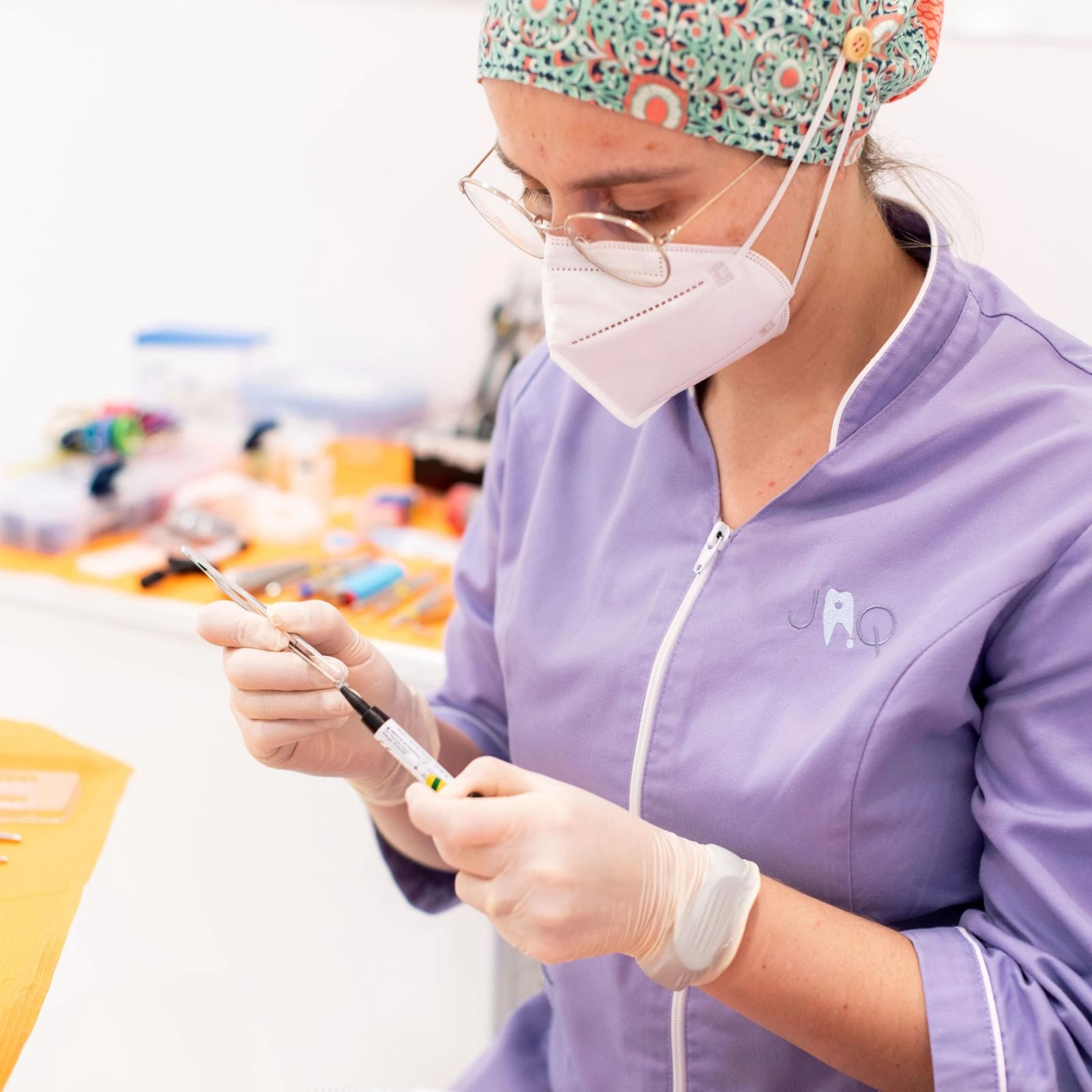
What types of orthodontic appliances are available?
There is currently a wide range of fixed and removable appliances designed to move teeth and guide jaw development into the desired positions.
- Fixed metal braces: The most common and traditional option. They use metal brackets bonded to the teeth and an archwire secured with small elastic bands, which may be coloured.
- Aesthetic fixed braces: Use brackets made from more aesthetic, tooth-coloured materials such as ceramic or sapphire, making them more discreet. Transparent elastic bands are typically used.
- Clear aligners: Consist of a series of transparent, removable aligners. These are custom-made for each patient and replaced periodically throughout treatment.
- Removable / functional appliances: Mainly used in children and adolescents as part of functional orthopaedics to guide jaw development during growth.
What care should be taken during orthodontic treatment?
During orthodontic treatment, it is essential to reinforce oral hygiene after every meal, using soft brushes, interdental brushes and dental floss to prevent tooth decay and gingivitis.
If you are using fixed braces: It is recommended to avoid hard and sticky foods that may damage the appliance, cut food into smaller pieces, use orthodontic wax if irritation occurs, and attend regular adjustment appointments.
If you are using a removable appliance: Clean the appliance daily with a toothbrush and mild soap, and always store it in its case during meals or when not in use to prevent damage or loss.
What is a retainer?
To maintain the results of orthodontic treatment, it is essential to use retainers, either fixed and/or removable, according to the orthodontist’s instructions, as teeth naturally tend to move back to their original position (relapse).
Retainers help stabilise the teeth while the surrounding bone and gum tissues adapt to their new alignment.

You’ve read. You understand. Now take care of your smile.
If this topic matters to you, book a consultation and speak with our team with time, clarity and clinical rigour.
Endodontics: Preserving your natural tooth

Modern Orthodontics: Beyond Straightening Teeth
